Quick answer: Plug-in solar kits up to 800VA become legal in the UK from 27 August 2026, provided they meet the government's Plug-in Solar Device Interim Product Specification. No installer or planning permission is needed, though DNO notification is mandatory. They cover solar generation only, not battery storage, and are expected to cost around £400. Because they sit outside MCS certification, they don't qualify for the Smart Export Guarantee, so realistic savings are around £70 to £110 a year, far less than a full rooftop system. Strict safety rules apply, including a ban on extension cables and restrictions on where they can be fitted.
Key takeaways
- Legal from 27 August 2026 for kits up to 800VA that meet the government's interim product specification
- No installer or planning permission required, but Distribution Network Operator (DNO) notification is mandatory
- Solar only, battery storage is not covered by the new rules
- Expected retail price around £400
- Not MCS-registered, so no Smart Export Guarantee, exported power is given away free
- Estimated savings of £70 to £110 a year
- Only one device is allowed per household circuit, and extension leads or adaptors are banned
- Certain building types and cladding systems are excluded from installation entirely
Plug-in solar panels are getting a lot of attention in the UK right now, and it's easy to see why. Low cost, no installer needed, just plug in and start generating. On the surface, it sounds like a no-brainer. At Fit Solar, we believe in giving you the full picture, not just the headline. Here's an honest look at what plug-in solar panels are, what changed on 27 August 2026, what they can and can't do, and whether they're the right move for your home.
What Are Plug-In Solar Panels?
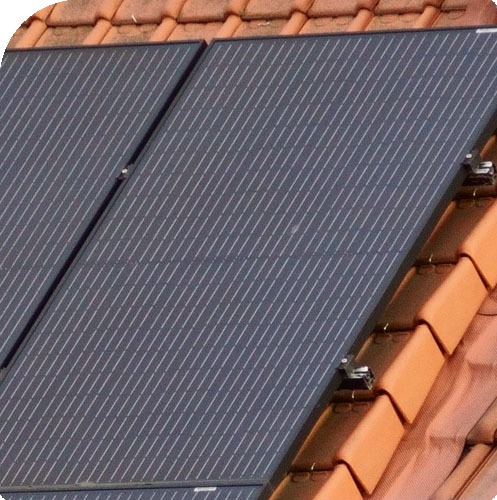
Plug-in solar panels are small, self-contained solar kits that plug directly into a standard household socket instead of being wired into your consumer unit by an electrician. Sometimes called plug-and-play solar or balcony solar panels, they generate electricity and feed it into your home via a normal 13A socket.
A typical plug-in solar setup includes:
- One or two solar panels
- A microinverter, which converts DC solar energy into usable AC electricity
- A plug connection into your home's existing circuit
That's it. No scaffolding, no qualified installer, no roof work. You position the panels, plug them in, and they start offsetting a small portion of your electricity use.
Simple, and that's genuinely useful in the right circumstances. But simple also means limited.
How Do Plug-In Solar Panels Work?
Plug-in panels convert sunlight to electricity and feed it straight into your home's circuit, where it's used instantly by whatever appliances are drawing power at that moment. There's no storage step involved.
- The panels capture sunlight and convert it to direct current (DC) electricity
- The microinverter converts that to alternating current (AC), the kind your home uses
- That electricity feeds into your home via the plug socket
- Any appliances drawing power at that moment use the solar energy first, reducing what you pull from the grid
This happens in real time. If the sun is shining and your fridge, router and a few standby devices are ticking over, you'll offset some of that background load. If you're not home, or the sun isn't out, the benefit drops to zero.
Are Plug-In Solar Panels Legal in the UK?
Yes, From 27 August 2026
Plug-in solar is legal in the UK from 27 August 2026, provided the kit is 800VA or under and meets the government's Plug-in Solar Device Interim Product Specification (Version 2.0, July 2026), published by the Department for Energy Security and Net Zero. This used to be a grey area, now it's settled. Compliant kits can be sold and plugged into a normal 13A socket with no installer and no planning permission needed.
A few important points worth knowing before you buy or recommend one:
- Solar only. The new rules cover plug-in solar panels; battery storage isn't included, and the specification explicitly states these devices must not be connected to or used with a battery energy storage system.
- 800VA cap, 3.5A current limit. The device's maximum apparent power is capped at 800VA, with the current at the socket limited to 3.5A even under reduced voltage conditions. PV module DC power is capped at 2000W, but the specification advises that any kit with modules totalling more than 960W should have the household's electrical installation professionally assessed first.
- One device per household circuit. Only one plug-in solar device may be connected to any single household circuit, and current network connection rules limit this to one device per household overall.
- DNO notification is mandatory. While no permission is needed to buy or fit a compliant kit, you're still required to notify your Distribution Network Operator when you connect or disconnect one.
- Expect them on the high street. Compliant kits are expected to appear in major retailers at around £400.
- Safety concerns remain. The Electrical Contractors' Association (ECA) has raised concerns about plugging generation kit directly into household wiring. Choose kit that's clearly certified to the specification, rather than any panel marketed as plug-in solar.
What this means for homeowners and installers: plug-in kits sit outside MCS certification, so there's no Smart Export Guarantee (SEG); any electricity generated but not used is given away to the grid for free. Realistic savings sit at around £70 to £110 a year. Expect more customers to ask about these kits, and expect to start finding them plugged in on walls during surveys. Know the 800VA and no-battery rules, and be ready to explain the core difference: a properly designed, MCS-registered system gets paid for the electricity it exports, a plug-in panel doesn't.
Safety Rules You Need to Know
The government's specification sets strict technical safety requirements covering plugs, disconnection speed, weatherproofing, and where devices can be fitted, on top of the 800VA power cap. These matter because a plug-in device is doing something a standard 13A plug wasn't originally designed for: pushing power out rather than only drawing it in.
Plug and disconnection requirements
Compliant devices must use a moulded BS 1363 plug fitted with a fuse no larger than 5A, with partially insulated pins to prevent contact with live parts. If the mains supply is interrupted, or the plug is pulled out, the inverter must automatically disconnect within 100 milliseconds, with voltage at the plug pins dropping below 34V in that time. This is designed to prevent the kind of shock risk you'd get from a device that keeps generating power after it's unplugged.
No extension leads or adaptors
Plug-in solar devices must be plugged directly into a wall socket. The specification explicitly bans extension cables, multi-way adaptors, RCD adaptors and travel adaptors. If a kit doesn't reach where you want to put it, the panel or inverter needs repositioning, not the cable.
Where you can't install one
The specification bans installation on several building types and surfaces, including:
- Aluminium composite material (ACM) or metal composite material (MCM) cladding
- High pressure laminate (HPL) cladding
- Timber cladding and timber balconies
- Buildings currently undergoing external wall fire safety remediation works
If you're in a flat or a building with cladding of any kind, check with the freeholder or managing agent before buying a kit, not after.
Weatherproofing and circuit checks
Any part of the device mounted outdoors, including outdoor plugs and sockets, must meet an IP55 weatherproofing rating or better. Households are also advised to periodically test their RCBO (the combined circuit breaker and safety trip in the consumer unit) while the panel is generating, since DC leakage from devices like these, similar to some EV chargers and IT equipment, can desensitise older protection over time. If the RCBO doesn't trip when tested, the advice is to get a qualified electrician to look at replacing it.
Source: Department for Energy Security and Net Zero, Plug-in Solar Device Interim Product Specification, Version 2.0, July 2026. See the official GOV.UK consultation and outcome page, or read the full specification (PDF) directly.
What Are the Benefits of Plug-In Solar?
Plug-in solar suits renters, first-time solar buyers, and anyone with low, daytime-heavy energy use who wants a low-cost way to try solar without committing to a full installation.
You're renting. If you can't install rooftop panels, a plug-in system gives you some access to solar generation without needing landlord permission for structural work.
You want to try solar before committing. It's a low-risk way to understand how solar generation works in practice and see whether it fits your lifestyle.
You have very low baseline usage. If you work from home with modest energy needs and most of your usage happens during daylight hours, plug-in solar can make a small but meaningful dent.
You're in temporary accommodation. A portable system you can take with you has obvious practical appeal.
The Honest Limitations of Plug-In Solar
We don't do jargon at Fit Solar, and we don't do spin either. Here's where plug-in solar genuinely falls short:
The main limitations are modest savings, no export payments, no battery compatibility, and reduced output from poor positioning, even after legalisation. We don't do jargon at Fit Solar, and we don't do spin either.
1. Savings Are Modest
An 800VA plug-in solar system will generate a useful amount of electricity across the year, but it only offsets a small fraction of total energy use. Realistic estimates put annual savings at around £70 to £110, with a relatively long payback period compared to a full rooftop system.
2. It Won't Power Your Home
Plug-in solar covers background consumption, things like fridges, routers and standby devices. It won't run your heating, support your EV charger, or handle peak demand. If reducing your energy bills in a meaningful way is the goal, plug-in solar won't get you there on its own.
3. Positioning Affects Performance
Because plug-in solar panels aren't roof-mounted and professionally optimised, they're often placed in less-than-ideal locations. Shading, a suboptimal angle, and inconsistent positioning all reduce output. What sounds like 800VA on paper can deliver considerably less in practice.
4. No Smart Export Guarantee, Ever
Because plug-in kits sit outside MCS certification, they're not eligible for the Smart Export Guarantee (SEG), and legalisation on 27 August 2026 doesn't change that. Any electricity generated but not used in that instant is simply given away to the grid for free. That's the single biggest financial gap between a plug-in kit and a full MCS-registered system, which earns money on every unit it exports on top of self-consumption savings.
5. Safety Is Still a Live Debate
Legal status doesn't mean the safety conversation is settled. The ECA has raised concerns about plugging generation equipment straight into household ring circuits designed for one-way power flow. If you go down this route, stick to kit that's clearly certified to the government's specification, don't use extension leads or adaptors, and don't assume every product badged plug-in solar meets the standard.
Plug-In Solar vs Full Solar System: A Straight Comparison
| Plug-In Solar | Full Solar System | |
|---|---|---|
| Installation | DIY, no installer needed | Professionally designed and fitted |
| Legal status | Legal from 27 August 2026 (800VA cap, solar only, must meet government spec) | Established |
| Upfront cost | Lower, around £400 | Higher |
| Output | Very limited, up to 800VA | High, typically 3 to 6kW or more |
| Annual savings | Modest, around £70 to £110 | Significant, £400 to £1,300 or more |
| Battery storage | Not compatible | Fully scalable |
| Export payment (SEG) | Not eligible, export given away free | Eligible |
| Long-term value | Low | High |
The gap between the two isn't just about size, it's about what you're actually trying to achieve. Some smart homeowners are cutting electricity bills by up to 90%
When Plug-In Solar Is and Isn't the Right Choice
Plug-in solar makes sense if:
- You're renting and can't install rooftop panels
- You want a low-commitment introduction to solar
- You only need to offset a small amount of baseline consumption
Plug-in solar isn't enough if:
- You want to significantly cut your energy bills
- You're planning to charge an EV with solar
- You want to pair solar with battery storage
- You're thinking about long-term energy independence
For most homeowners, plug-in solar is a stepping stone, not a destination.
The Better Long-Term Approach
If your goal is genuine energy independence, generating meaningful amounts of free electricity, storing it in a battery, and insulating yourself from rising energy prices, then a professionally designed solar system is the right move.
At Fit Solar, we design and install solar PV systems across the Cotswolds, Gloucestershire and the surrounding area. Every system is tailored to your property, your roof type, and your energy use, whether you're in a new build or a historic stone cottage.
A full system can:
- Generate enough electricity to cover most of your home's needs
- Integrate with battery storage so you're using your own power day and night
- Make you eligible for the Smart Export Guarantee, earning you money on any surplus
- Add value to your property (analysis of over five million property sales by Solar Energy UK shows a typical solar system can increase home value by £2,722)
And we back everything with a 25-year guarantee on panels, plus a 2-year insurance-backed guarantee on our workmanship.
Frequently Asked Questions About Plug-In Solar Panels
For renters or those wanting to dip a toe into solar, plug-in kits offer a useful introduction, and legalisation from 27 August 2026 makes them a lower-risk option than before. For homeowners looking to make a meaningful reduction to their energy bills, a full MCS-registered solar system will still deliver far greater long-term value, including SEG export payments that plug-in kits will never qualify for.
Plug-in solar panels are small, self-contained solar systems that connect to a standard mains socket. They generate electricity from sunlight and offset a portion of your home's background energy use, but they are not a replacement for a full rooftop solar installation.
They capture sunlight, convert it to electricity via a built-in microinverter, and feed it into your home through a standard plug socket. The energy is used instantly by whatever appliances are running at the time, reducing how much you draw from the grid.
The government's specification sets detailed safety requirements, including a 3.5A current limit, a plug fuse no larger than 5A, and a requirement for the inverter to cut power within 100 milliseconds of being unplugged, with voltage dropping below 34V in that time. The ECA has still raised concerns about feeding generation into sockets designed for one-way power flow, so buyers should check a kit is certified to the specification rather than assuming any product marketed as plug-in solar meets it.
Yes. From 27 August 2026, plug-in solar kits up to 800VA that meet the government's Plug-in Solar Device Interim Product Specification can be sold and used without an installer or planning permission. Notification to your Distribution Network Operator is still mandatory. The rules cover solar only, not battery storage, and the ECA has raised safety concerns, so it's worth sticking to kit that's clearly compliant with the specification rather than anything simply marketed as plug-in solar.
Realistic estimates put savings at around £70 to £110 a year for an 800VA kit, depending on household energy usage and how much electricity is drawn during daylight hours. Plug-in systems help with background consumption but won't make a significant impact on total energy bills the way a full solar system can.
No, a smart meter isn't essential for plug-in solar to work. It can be useful for monitoring your usage, but unlike a full solar installation, plug-in systems don't typically offer export benefits, so smart meter integration is less important.
No. Plug-in kits sit outside MCS certification, so they're not eligible for the Smart Export Guarantee even under the new rules that legalised them from 27 August 2026. Anything generated but not used immediately is simply given away to the grid. This is one of the biggest practical differences from a full MCS-registered system, which gets paid for every unit it exports.
No. The specification explicitly bans extension cables, multi-way adaptors, RCD adaptors and travel adaptors. The device must be plugged directly into a wall socket.
Installation is banned on aluminium composite material or metal composite material cladding, high pressure laminate cladding, timber cladding, timber balconies, and any building currently undergoing external wall fire safety remediation works. If you live in a flat or a clad building, check with the freeholder or managing agent first.
Only one plug-in solar device is permitted per household circuit, and current network connection rules limit this to one device per household overall.
Compliant kits are expected to retail at around £400 through major UK retailers once the new rules take effect.
Rooftop solar systems are professionally designed to maximise generation from your specific property. They produce significantly more electricity, integrate with battery storage, qualify for export tariffs, and deliver real long-term savings. Plug-in solar is cheaper and simpler to set up, but the difference in output and savings is substantial.

Free guide
There is a wealth of excellent information available online regarding solar energy; however, there is also plenty of misleading content out there.
With that in mind, we've created this handy guide for you to download for FREE. We hope it provides you with a clear overview of what solar PV and battery storage are, how they work, and how they can benefit you.
Ready to Make a Proper Switch to Solar?
If you're ready to move beyond the basics and invest in a solar system that actually makes a difference to your bills, we'd love to help.
At Fit Solar, we'll design a system around your home, no jargon, no hidden surprises, and a beat-any-quote guarantee. Use our Solar Panel Calculator to get an idea of what's possible, or arrange a free, no-pressure consultation.