With energy bills still high and buyers increasingly focused on running costs, solar panels have become one of the most talked-about home improvements in the UK. But do they actually increase what your property is worth? Here is what the data says.
The Short Answer: Yes, With the Right System
Solar panels can and do add value to residential properties in the UK. The evidence from both academic research and market analysis is increasingly clear: homes with solar PV systems sell for more, sell faster, and are becoming more desirable as energy costs remain elevated and buyers prioritise low running costs.
That said, the amount of value added is not fixed. It depends on your location, property type, system size, whether the panels are owned outright, and the current EPC rating of your home. We will break all of this down below.
What the Research Actually Says
The most comprehensive UK data on this topic comes from Solar Energy UK, whose analysis of over five million property transactions found that solar panels added an average of £2,722 to the value of a typical home. Importantly, this figure is a lower bound for higher-value properties. The research found that the uplift scales with property price, meaning a £400,000 home in the Cotswolds could see a proportionally greater increase than the national average.
In the United States, where solar adoption is more mature, Zillow found that homes with solar installations sold for around 4% more than comparable non-solar homes. Applied to a £300,000 UK property, that would represent £12,000 in additional value. While the UK property market operates differently, the directional signal is consistent: buyers will pay a premium for lower energy bills.
A further study by the Department of Energy Security and Net Zero found that properties with higher EPC ratings, which solar installations directly improve, command significantly higher sale prices. These are typically between 4% and 14% above equivalent lower-rated homes, depending on the scale of the upgrade.
Solar Panels and EPC Ratings: A Direct Link to Value
In the UK, every property sold or rented is required to have an Energy Performance Certificate (EPC), which is a rating from A (most efficient) to G (least efficient). Solar panels have a direct, measurable impact on EPC scores by reducing a property's estimated energy costs and carbon emissions.
For many homes, the installation of a solar PV system is enough to move them from an EPC rating of D to C, or from C to B. This matters enormously for property value because:
- Many mortgage lenders offer preferential rates for properties with EPC ratings of C or above
- From 2025 onwards, government policy is pushing for higher EPC standards on rental properties, making improvements more urgent for landlords
- Buyers increasingly filter property searches by EPC rating, particularly first-time buyers conscious of running costs
- Estate agents now actively market higher EPC ratings as a prominent selling point
As a rough guide to how EPC ratings relate to value:
- EPC A (Excellent): estimated annual energy costs around £500 to £800, typically commands a 10% to 14% premium over a band D equivalent. Solar panels are a core component of A-rated homes.
- EPC B (Very Good): estimated annual energy costs around £800 to £1,200, typically commands a 6% to 10% premium. Adding battery storage alongside panels often achieves a B rating.
- EPC C (Good): estimated annual energy costs around £1,200 to £1,700, typically commands a 2% to 6% premium. This is the most common outcome of installing solar on an average UK home.
- EPC D (Average): estimated annual energy costs around £1,700 to £2,400. This is where most pre-solar homes sit and serves as the baseline.
- EPC E (Below Average): estimated annual energy costs around £2,400 to £3,200, typically 4% to 8% below an equivalent D-rated property. Solar alone may not fully compensate for other inefficiencies at this level.
It is worth noting that EPC assessors calculate scores based on a standardised methodology, so the actual improvement to your rating will depend on your property's current insulation, heating system, roof orientation, and the size of your solar array. A professional survey, like those carried out by Fit Solar before every installation, will give you an accurate picture.
How UK Buyers View Solar-Equipped Properties
Buyer attitudes have shifted markedly over the past five years. A 2024 survey by Rightmove found that over 70% of UK home buyers consider energy efficiency to be an important factor in their purchasing decision, with many stating they would pay a premium for a home with solar panels already installed.
This shift is largely driven by lived experience. After the energy crisis of 2021 to 2022, millions of households saw their bills double or triple. Those conversations do not disappear quickly, and buyers entering the market in 2025 and 2026 are acutely aware of energy running costs in a way that simply was not true five years ago.
For sellers, solar panels now serve a dual purpose: they attract more buyers and support a higher asking price. Estate agents in areas like Stroud, Cirencester, Cheltenham, and across the Cotswolds have reported that energy-efficient features, and solar in particular, are increasingly being highlighted in property listings and are influencing offers.
Return on Investment: The Full Financial Picture
Property value uplift is one part of the solar return on investment story, but it is worth understanding the complete financial picture. The case for solar is strong even before you factor in what it does to your asking price.
Bill savings
A typical domestic solar PV system in the UK generates between 3,000 and 4,500 kWh of electricity per year, depending on location, roof orientation, and system size. With electricity prices currently around 24p per kWh, that represents a saving of roughly £720 to £1,080 per year on your energy bills.
Smart Export Guarantee
Under the government's Smart Export Guarantee (SEG), you can sell surplus electricity back to the grid through your energy supplier. SEG rates vary by provider but currently range from around 3p to 15p per kWh, providing an additional income stream on top of your bill savings.
Battery storage multiplier
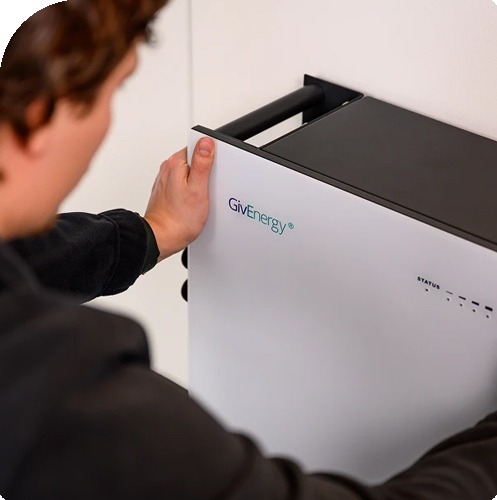
Adding a home battery, such as a FoxESS or GivEnergy system, allows you to store energy generated during the day for use in the evening. This can increase your solar self-consumption from around 30 to 40% without storage, up to 60 to 80% with storage, dramatically improving your payback period and overall bill savings.
Payback period
Most UK homeowners achieve full payback on their solar investment within 7 to 10 years, depending on system size, energy usage, and whether battery storage is included. With panels warranted for 25 years and typically producing well beyond that, the financial case is compelling, particularly when viewed alongside the property value uplift.
Solar panels are one of the few home improvements that save you money while you live there and add to your asking price when you come to sell. That is a rare combination.
Does Adding Battery Storage Further Increase Property Value?
Battery storage is an increasingly important consideration when thinking about property value. While the research on batteries specifically is less mature than for solar panels alone, the consensus among estate agents and energy consultants is that a combined solar-plus-storage system is more attractive to buyers than solar alone.
There are a few reasons for this. First, a battery means the home is less reliant on the grid and can provide power during evening hours and, in some configurations, during brief outages. Second, a home with both solar and storage often achieves a higher EPC rating than one with solar alone. Third, buyers can immediately grasp the practical benefit: lower bills throughout the day, not just during daylight hours.
Fit Solar installs leading battery systems and our team can advise on the right storage capacity for your household usage pattern and roof array.
What Factors Affect How Much Value Solar Panels Add?
Not all solar installations add the same amount of value. Here are the key variables that influence the uplift you can expect.
System size and output
A larger, higher-output system generates more electricity, achieves a better EPC improvement, and is more attractive to buyers. A 4kWp system (typically 10 to 12 panels) is the most common domestic installation, but systems of 6 to 10kWp are increasingly popular as panel costs have fallen.
Roof orientation and shading
South-facing roofs with minimal shading produce the most electricity and are the most valuable from a buyer's perspective. South-east and south-west orientations also perform well. A professional assessment will determine the optimal configuration for your property.
MCS certification
Panels installed by an MCS-certified installer like Fit Solar carry significantly more weight with buyers and mortgage lenders. MCS certification guarantees the installation meets strict quality and performance standards, and it is a prerequisite for the Smart Export Guarantee and certain green mortgage products.
Age and condition of the system
A recently installed system with a full warranty is more valuable than an older installation approaching the end of its performance guarantee. If you are buying a property with existing panels, it is worth checking the installation date and whether the system is still under warranty.
Property type and location
Solar adds proportionally more value in areas with higher energy costs, higher property values, and strong buyer demand for energy efficiency. Rural areas like the Cotswolds, where off-grid resilience is valued and heating costs can be high, tend to see stronger solar premiums.
A note on listed buildings and conservation areas: Properties in conservation areas or with listed building status may require planning permission for solar panel installation. The Cotswolds contains many such properties, and it is essential to check with your local planning authority before proceeding.
What About Leased Solar Panels?
If you are buying or selling a property with panels installed under a legacy rent-a-roof or solar lease scheme, the situation is more complicated. Under these arrangements, a third party owns the panels and leases the roof space from the homeowner in exchange for free or discounted electricity.
Leased panels can complicate property sales for several reasons. The lease agreement must be transferred to the new buyer, which some buyers and their solicitors find off-putting. Some mortgage lenders are reluctant to lend on properties with third-party leases on the roof. As a result, leased panels can actually make a property harder to sell, particularly if the lease term is long.
Owned solar panels are a different matter entirely. When you own your system outright, as with a standard installation through Fit Solar, there are no third-party agreements to transfer, no lease complications, and the full value of the system accrues to you as the homeowner
If you have leased panels, it may be worth exploring the cost of buying out the lease before putting your property on the market. A specialist installer can advise on your options.
Solar Panels in the Cotswolds and Stroud Area
For homeowners in Stroud, Cirencester, Cheltenham, Tetbury, Nailsworth, and the wider Cotswolds, there are some additional factors that make solar particularly compelling, along with some local considerations worth bearing in mind.
Higher-than-average property values
Property prices in the Cotswolds are significantly above the national average, meaning the proportional value uplift from solar can be higher in absolute terms than the national £2,722 figure. A 1% improvement on a £450,000 Cotswolds property is worth £4,500.
Rural energy costs
Many rural properties in the Cotswolds are not connected to mains gas, relying instead on oil boilers, LPG, or electric heating. For these properties, electricity costs are a major household expense, and solar, particularly when combined with a heat pump and battery storage, can transform running costs.
Cotswolds AONB and planning considerations
The Cotswolds is an Area of Outstanding Natural Beauty, and some parishes have specific guidance on solar panel aesthetics. Fit Solar has worked extensively across the AONB and can advise on roof configurations that meet planning requirements whilst maximising energy output. We are experienced with slate, tile, and flat roof installations on both historic and contemporary properties.
Local expertise matters
Choosing a local, independent installer like Fit Solar means working with a team that understands the local planning environment, the typical property types in the area, and the specific grid connection considerations in Gloucestershire. National companies often lack this level of granular local knowledge.
Fit Solar are the Cotswolds' top-rated solar installers. We are MCS-certified, independent, and offer a 25-year panel guarantee plus a beat-any-quote promise. Solar systems start from £2,999. See our prices or book a free site survey.
Frequently Asked Questions
Yes. Research analysing over five million UK property sales found that a typical solar installation adds around £2,722 to a home's value, with higher-value properties seeing proportionally greater uplifts. The figure is expected to grow as energy costs and awareness of EPC ratings continue to increase.
On average, solar panels add around £2,722 to a UK property's value, according to Solar Energy UK's analysis of more than five million property sales. For higher-value homes, particularly in areas like the Cotswolds where average prices are well above the national average, the increase in cash terms can be considerably greater.
Solar panels reduce a property's estimated energy costs and carbon emissions, which are two of the core inputs in the EPC methodology. For many average homes, a well-sized solar installation is enough to move the property from a D to a C rating, or from C to B. A higher EPC rating typically commands a higher sale price and can unlock better mortgage rates.
Evidence increasingly suggests yes, particularly since the 2021 to 2022 energy crisis. Buyers are much more attentive to running costs than they were five years ago, and solar panels, especially owned and MCS-certified systems, are viewed as a tangible, long-lasting asset rather than a cosmetic feature.
Most homeowners in the UK achieve payback within 7 to 10 years, depending on system size, energy usage, roof orientation, and whether battery storage is included. With panels warranted for 25 years and typically performing well beyond that, the long-term financial case is strong.
Not in the same way as owned systems. Leased panels involve a third-party agreement that must be transferred on sale, which can deter buyers and complicate mortgage applications. Owned solar installations are far preferable from both a value and a saleability perspective.
Battery storage enhances the appeal of a solar installation by enabling higher self-consumption of generated energy, improving EPC scores, and providing greater energy independence. While specific data on storage-only uplift is limited, a combined solar-plus-storage system is generally considered more desirable than solar alone and is increasingly expected by energy-aware buyers.
In most cases, solar panels on residential properties fall under permitted development rights and do not require planning permission. However, listed buildings and properties in conservation areas may have restrictions, and the Cotswolds AONB has specific local guidance. Fit Solar has extensive experience with installations across the area and can advise on your specific property.
Yes, in most cases. Solar panels reduce your energy bills while you remain in the property, can improve your EPC rating, and add to your asking price when you sell. The combination of ongoing savings and property value uplift means the investment can pay back even over a relatively short ownership period.
Most modern solar panels are warranted for 25 years and typically continue producing electricity well beyond that, albeit at a gradually reducing output. A quality installation by an MCS-certified installer like Fit Solar will ensure your system performs reliably for decades.