Most home solar installations take 3 to 5 working days from the day scaffolding goes up to the day your MCS certificate lands in your inbox. Knowing this upfront matters because the things that catch people off guard usually aren't the panels going on the roof. It's not knowing when the power will be off, how much noise to expect, or when the scaffolding company is coming back. We don't do jargon and we don't do hidden surprises, so here's the honest, stage-by-stage breakdown of what happens, how long each bit takes, and what disruption to expect, so you can plan around it properly.
Quick summary: the solar installation timeline
- Preparation: Scaffolding is usually erected 1–2 days before the main work begins.
- Installation: The physical install of panels, inverter, and battery typically takes 1–3 days.
- Power interruption: Electricity is only off for a few hours, during the final connection.
- Commissioning: We test the system and set up your monitoring app so you can see savings in real time.
- Certification: You receive your MCS certificate and DNO notification shortly after completion, which is what allows you to earn money back from the grid.
How long does scaffolding take to go up before installation?
Scaffolding is usually the first visible sign that work has started, going up half a day to a full day before the main installation, depending on the size and complexity of your roof.
Once your order is confirmed, our team begins ordering your panels, inverter, battery (if applicable), and all mounting equipment and cabling behind the scenes. Scaffolding then goes up around the property to give installers safe access to the roof. This is a requirement under UK working-at-height regulations, not an optional extra. Disruption at this stage is minimal: expect some noise from the poles going up and temporary restricted access to parts of your garden or driveway while the scaffolders are on site.
What happens on the day my solar panels are installed?
Installation day is when the system physically goes onto your roof, and it typically takes 1 to 3 days, depending on system size and whether battery storage is included.
Our certified installers start by fitting the mounting system, attaching rails to your roof rafters in a way that keeps your roof's structural integrity intact. This is where a proper survey earns its keep. A rafter layout that looks straightforward from the ground can still throw up a spacing surprise once installers are actually up there, and it's much better to know that before the day than during it. The panels are then lifted onto the rails and wired in series or parallel depending on your system design, with cabling run discreetly into the property.
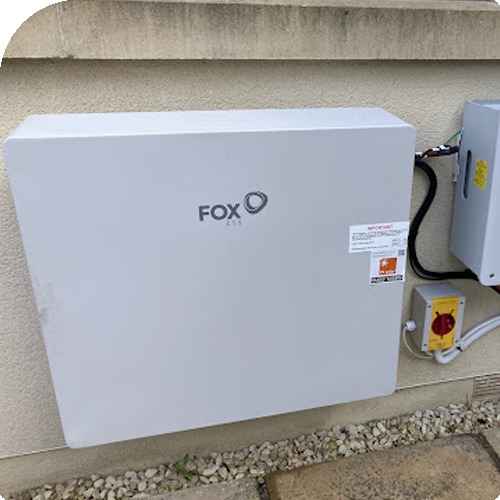
The inverter, which converts the DC electricity your panels generate into the AC electricity your home actually uses, is fitted next, usually in a garage, utility room, or on an external wall, somewhere cool, dry, and easy to access. If you've added battery storage, it's installed alongside the inverter. Our electricians then wire everything together: panels to inverter, inverter to battery, and inverter to your consumer unit.
Your electricity will be off for a few hours on this day while the system is safely connected to your consumer unit. This is the one disruption most households ask about in advance, and it's worth planning around if you work from home or rely on medical equipment that needs power. Expect some drilling noise too, but our team will keep you updated throughout.
How is my new solar system tested and commissioned?
Testing and commissioning usually take half a day to a full day once the physical install is complete.
Our engineers check voltage, current, and insulation resistance, and verify every connection before anything is switched on. Once the system passes, it's powered up and configured: we confirm the inverter is communicating correctly and, if you have a battery, that it's charging and discharging as expected. We'll also get you set up on the monitoring app so you can see generation and usage from your phone.
The handover itself matters just as much as the technical checks. Our installer talks you through the system in person: how to read the inverter display, how the app works, and how to shut everything down safely in an emergency, even though you'll probably never need to. Disruption here is minimal: your electricity might be briefly interrupted during testing, and that's it.
What certification do I get, and why does it matter?
Once you're happy with the handover, you'll receive your MCS certificate, electrical installation certificates, and warranty documents for your panels, inverter, and battery.
The MCS (Microgeneration Certification Scheme) certificate isn't just paperwork for the drawer. It's what validates your installation for any current or future government export schemes, and without it you can't get paid for the electricity you export back to the grid. Alongside this, your installer notifies your Distribution Network Operator (DNO) that your system is now connected, which is a mandatory step for any grid-connected solar installation in the UK, not something specific to Fit Solar.
Scaffolding removal happens within a few days of the main installation, once all the work is signed off.
What happens after my installation is finished?
Installation isn't where the relationship ends. Our Fit Care support covers everything from an annual system health check to 24/7 electrical assistance.
Ready to start saving? If you haven't made the leap yet, use our solar panel calculator to see what installation would look like for your home, or call our Stroud-based team on 01453 705915 to book a survey.

Download our FREE guide
Choosing to power your home with solar energy is a major decision, and there's a lot to think about from the financial investment to the technical details and the installation process.
We've compiled a list of The 10 most important questions you should ask any solar installer to help you cut through the noise, understand your options clearly, and feel confident about what really matters when it comes to solar.