Solar for home
 Solar for business
 Battery storage
 EV charging
 Solar panel calculator

 Fit Care
 Installation maintenance
 Panel cleaning
 case studies
 customer reviews
 Helpful information



Quick answer
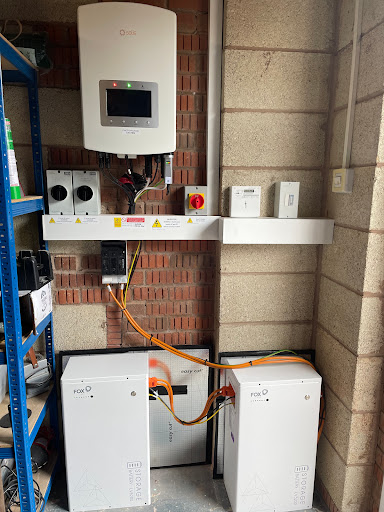
Most home batteries in the UK switch off during a power cut, even when fully charged, because grid safety rules require them to disconnect. To keep your lights on, the battery needs an Emergency Power Supply (EPS) or backup circuits, wired in at installation. With backup in place, a fully charged 9.5kWh battery can keep the essentials in a typical home running for around two days, and a 5.2kWh battery for around one, switching over in a fraction of a second on most modern systems.
It surprises many battery owners. The grid goes down, the house goes dark, and the battery sitting in the garage, full to the brim, does nothing. This isn't a fault. It is how a standard grid-tied battery is designed to behave. This guide explains why, what EPS and backup do differently, and what a backup battery can realistically run.
Why a standard home battery turns off in a power cut
When the grid fails, engineers may be working on the lines near your home. If your battery or solar panels kept pushing electricity into those lines, it could seriously injure them. So UK grid connection rules require every grid-connected inverter to disconnect within moments of losing the grid. This is called anti-islanding protection.
A standard battery has no way to separate your home from the grid. Once it disconnects, it simply stops, leaving your house without power alongside your neighbours.
A backup-enabled system adds the missing piece. It isolates your home from the grid automatically, then runs your circuits from the battery as a safe, independent "island". When the grid returns, it reconnects and carries on as normal.
EPS vs whole-house backup: the three levels
| Level | What stays on | How it switches | Best for |
|---|---|---|---|
| EPS socket | One dedicated socket; you plug essentials into it | Automatic at the socket, but you move appliances yourself | Keeping a fridge, router or medical device going on a budget |
| Protected circuits | Chosen circuits on a separate backup sub-board, such as fridge, lights, boiler and router | Automatic | Most homes that want the essentials covered without thinking |
| Whole-house backup | Your entire consumer unit, with power-hungry circuits managed | Automatic, through a changeover switch or backup gateway | Homes that want normal life to carry on during an outage |
How fast is the EPS switchover?
Switchover time is the gap between the grid failing and the battery taking over. It varies a lot between systems:- UPS-grade systems: under 10–20 milliseconds. Many modern hybrid inverters switch within this range. Lights don't visibly flicker, and computers, routers and clocks usually keep running.
- Standard EPS: around 1–10 seconds. Some older or budget inverters pause for a few seconds before backup power comes on. Everything stays safe, but devices will reboot and clocks reset.
Power vs energy: the two numbers that decide what a backup battery can run
Two different figures limit a backup battery, and they are easy to mix up:- Energy (kWh) is how much the battery holds. It decides how long your home can run. A 9.5kWh battery holds 9.5 kilowatt-hours.
- Power (kW) is how much the inverter can supply at once. It decides how many appliances can run at the same moment.
What can a backup battery run?
These are typical figures for UK appliances. Your own usage will vary.| Appliance | Power while running | Typical energy per day in an outage | Runs on backup? |
|---|---|---|---|
| Fridge-freezer | 100–150W | About 1kWh | Yes, comfortably |
| Gas or oil boiler (controls and pump) | About 100W | 0.5–1kWh | Yes, keeps your heating and hot water working |
| Wi-Fi router and phone charging | About 20W | About 0.5kWh | Yes |
| LED lighting, whole house | 100–200W | 0.5–1kWh | Yes |
| TV and laptop | 50–150W | About 0.5–1kWh | Yes |
| Kettle and microwave | 1–3kW | 0.2–0.5kWh | Yes, one at a time |
| Washing machine | Up to 2kW | About 0.8kWh a cycle | Yes, ideally on its own |
| Electric oven | 2–3kW | 1–1.5kWh a use | Yes, if not paired with other big loads |
| Induction hob | Up to 7kW | 0.5–1.5kWh | Partly: use one or two zones |
| Heat pump | 1–3kW | 10–30kWh in winter | Limited: hours, not days |
| Electric shower | 8–10.5kW | Not applicable | Usually no, as it exceeds most inverters |
| EV charger | 7kW | Not applicable | No, normally excluded from backup |
| Daily use in an outage | 5.2kWh battery | 9.5kWh battery |
|---|---|---|
| Essentials only (fridge, boiler, router, lights, TV and laptop): about 3.5–4.5kWh a day | Roughly one day | Roughly two days |
| Near-normal living (essentials plus cooking and a wash): about 7–9kWh a day | Roughly half a day | Roughly one day |
- Need longer? Batteries can be stacked to add capacity, so homes that want several days of cover can scale up.
- With solar panels: on compatible systems, your panels keep recharging the battery during daylight, which can extend backup much further, even in winter.
What does battery backup cost?
Adding EPS to an existing system typically costs a few hundred pounds for a single socket or protected circuits, and more for a whole-house changeover. A complete whole-house backup battery from a national brand such as Tesla Powerwall 3 is widely quoted at around £8,500 to £10,500 fitted. Fit Solar's battery systems start at £2,995 for 5.2kWh and £4,495 for 9.5kWh, fully installed, including the inverter, an IP65-rated battery with a 12-year warranty, and MCS-certified installation. Backup can be added to suit your home, from a single EPS socket to protected circuits, and we price it after your survey. Most backup systems also need an earth rod, because your home loses its grid earth when it is cut off from the network. We confirm exactly what your property needs during the survey. The same battery earns its keep every day on a cheap overnight tariff, so you're not paying for backup that sits idle. Our guide to batteries without solar panels shows the typical savings.How much backup do you need?
Backup is worth having if:- You live rurally on overhead lines that are prone to storm damage, as many Cotswold villages are.
- Your heating needs electricity, as gas and oil boilers do, so a winter outage leaves you cold.
- You work from home or rely on broadband.
- You have a private water pump, sump pump, freezers full of food, or livestock equipment.
- Someone in your household relies on medical equipment.
Power cuts in the Cotswolds
Our rural lanes and hilltop villages are beautiful, but they are often served by long overhead lines through trees. Winter storms bring branches down, and repairs to remote properties can take longer than in towns. For farmhouses, cottages with oil-fired heating, and anyone who works from home, a backup battery turns a power cut from a crisis into a non-event. See our guide to battery storage for historic Cotswold homes.Keep your home running when the grid doesn't
See our battery prices or book a free survey. We'll check your consumer unit, earthing and essential loads, and design backup that fits how your home actually works.Related guides
- UK time-of-use tariffs and battery automation guide
- Can you install a home battery without solar panels?
- AI battery optimisation: do you actually need it?
- Battery storage for older and historic Cotswold homes
- Smart battery tariffs: Next Optimise, Axle, Enel X and your backup reserve
Frequently asked questions
Only if it has EPS or whole-house backup installed. A standard grid-tied battery switches off during a power cut for safety. A backup-enabled battery isolates your home from the grid and keeps your circuits running.
EPS stands for Emergency Power Supply. It is an output on a hybrid inverter that powers chosen sockets or circuits from the battery when the grid fails.
UPS-grade systems switch over in under 10 to 20 milliseconds, so most devices keep running. Some older or budget inverters take one to ten seconds, which causes devices to reboot.
Usually, yes. When your home is cut off from the grid, it also loses the grid's earth connection, so most backup installations need a local earth rod. We confirm this during the survey.
Running essentials only, a 5.2kWh battery lasts roughly a day and a 9.5kWh battery roughly two days. Solar panels and extra stacked batteries can extend this.
Usually not. Electric showers and EV chargers draw 7kW to 10.5kW, more than most home battery inverters supply, so they are normally excluded from the backup circuits.
Adding EPS to a battery typically costs a few hundred pounds for a single socket or protected circuits, and more for a whole-house changeover. Fit Solar batteries start at £2,995 installed, with backup priced after a survey. National-brand whole-house backup batteries are commonly quoted at around £8,500 to £10,500.
- Hybrid inverter EPS transfer times, EPEVER
- Older SolaX model switchover under 1.5 seconds, SolaX support
- UK EPS checklist and sub-10ms switchover models, SolaX
- Anti-islanding, EPS wiring and earthing, Solar Tech Support
- Backup levels, earth rod and neutral-earth bond, SolarLove
- Tesla Powerwall 3 fitted prices, Best Builders
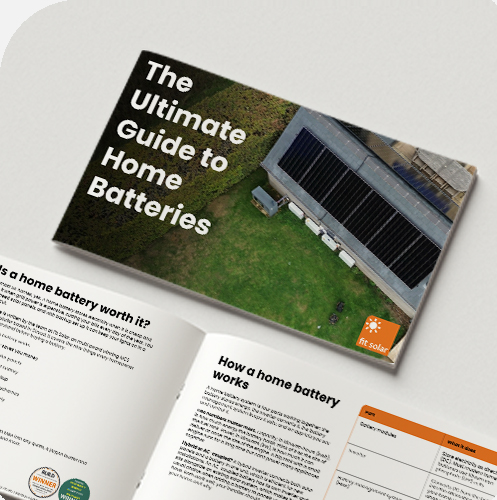
Download our FREE guide
Thinking about a home battery? Our Ultimate Guide to Home Batteries covers how batteries save you money, what size you need and what to ask every installer.