Solar for home
 Solar for business
 Battery storage
 EV charging
 Solar panel calculator

 Fit Care
 Installation maintenance
 Panel cleaning
 case studies
 customer reviews
 Helpful information




Quick answer: Yes, you can add a battery to almost any existing UK solar system. Fit Solar installs a 5.2kWh battery from £2,995 and a 10kWh battery from £4,495, at 0% VAT until 31 March 2027. Most homes need 5–10kWh, and the right brand depends on your existing inverter, how much backup you want, and which app you prefer.
Interest in home batteries has jumped this year. New hardware, smart tariffs and the end of 0% VAT in April 2027 have all played a part. If you already have solar panels, a battery is the obvious next step. It stores the daytime power you would otherwise export for a few pence and uses it in the evening, when grid electricity costs around 30p a unit or more.
This guide explains how adding a battery works, what it costs, how to size it, and how the brands we install compare. That includes Fox ESS, SolaX, Sigenergy, myenergi, Sunsynk, and Solis inverters paired with Pylontech or Dyness batteries.
Key points
- You can retrofit a battery to existing solar, with or without replacing your inverter.
- Fit Solar battery prices: 5.2kWh from £2,995, 10kWh (about 9.5kWh usable) from £4,495, both MCS-installed with a 12-year battery warranty.
- Battery installations are zero-rated for VAT until 31 March 2027, then 5%.
- The government's Warm Homes Loan lets you borrow up to £15,000 for a battery at 0% or low interest.
- A Tesla Powerwall 3 typically costs about £8,000–£10,500 installed for 13.5kWh. We install alternatives that cost less per kWh.
Can you add a battery to existing solar panels?
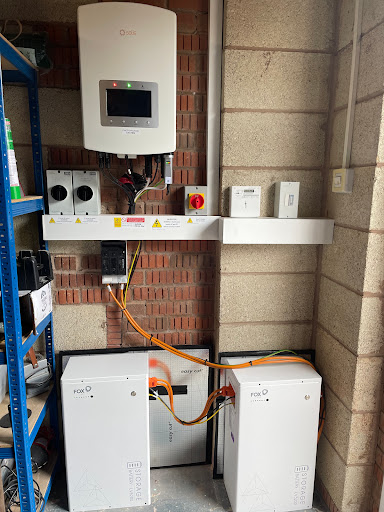
Yes. There are two ways to do it: keep your existing solar inverter and add a battery with its own inverter (AC-coupled), or swap your inverter for a hybrid inverter that runs both panels and battery (DC-coupled). Which is better depends mainly on how old your current inverter is.
| AC-coupled (keep your inverter) | DC-coupled (new hybrid inverter) | |
|---|---|---|
| How it works | A separate battery inverter sits alongside your existing solar inverter | One hybrid inverter manages the panels and the battery |
| Best for | Newer solar inverters with years of life left; homes on the Feed-in Tariff that want minimal change | Inverters over about 8–10 years old or due for replacement; new panels being added at the same time |
| Efficiency | Slightly lower, because solar power is converted DC to AC to DC and back | Higher, because the battery charges straight from the panels |
| Disruption | Least: your solar wiring stays as it is | More: the old inverter comes out |
| Cost | Usually the cheaper retrofit | Adds the cost of a hybrid inverter, but saves a future inverter replacement |
What about my Feed-in Tariff? Adding a battery does not end your FIT payments, but your FIT supplier needs to know. The battery must not charge from the grid and then be counted as solar generation, so metering and set-up matter. We handle the paperwork. See Can I Upgrade My Solar Panels and Still Keep My FIT Tariff?
Do I need permission from the network operator? Smaller systems are simply notified to your local network operator after installation (G98). Larger systems, or a battery that pushes your total inverter capacity over 3.68kW per phase, need approval before installation (G99). We submit this for you.
Where does the battery go? In a garage, utility room or outbuilding, or outside in an IP65-rated unit. See Garage vs Outside: Where Is the Best Place for Your Solar Battery?
How much does a home battery cost in the UK?
A home battery installed by Fit Solar costs from £2,995 for 5.2kWh or £4,495 for 10kWh, including the inverter and MCS-certified installation. Larger systems are quoted after a survey.
| System | Usable storage | Price (0% VAT) | Price per kWh | Warranty |
|---|---|---|---|---|
| Fit Solar 5.2kWh battery solution | About 5kWh | £2,995 | About £575 | 12-year battery, 10-year+ inverter |
| Fit Solar 10kWh battery solution (most popular) | About 9.5kWh | £4,495 | About £450 | 12-year battery, 10-year+ inverter |
| Tesla Powerwall 3 (for comparison, not installed by Fit Solar) | 13.5kWh | About £8,000–£10,500 installed | About £590–£780 | 10-year |
What changes the price:
- Retrofit type. An AC-coupled battery alongside your existing inverter is usually cheaper than fitting a new hybrid inverter.
- Capacity. The bigger the battery, the lower the cost per kWh, but each extra kWh saves less.
- Backup. Whole-house backup needs extra switchgear. See Home Battery Backup and Power Cuts.
- Location. A long cable run to a garage or outbuilding adds labour.
VAT rises in April 2027. Battery installations are zero-rated until 31 March 2027, including batteries retrofitted to existing solar. From 1 April 2027 the rate is 5%, which adds about £225 to a £4,495 battery. See VAT on Solar Panels Is Rising on 1 April 2027.
You can spread the cost. The Warm Homes Loan Scheme, launched on 27 October 2026, lets homeowners borrow up to £15,000 for a battery at 0% or low interest through approved lenders. See Warm Homes Loan Scheme 2026 Explained.
What size home battery do I need?
Most UK homes need 5–10kWh of storage. The aim is to cover what you use between sunset (or the end of your cheap tariff window) and the next morning, not your whole day.
| Your home | Typical annual use | Suggested battery |
|---|---|---|
| 1–2 bedrooms, low evening use | Under 2,500kWh | 5kWh |
| 3–4 bedrooms, typical family | 2,500–4,000kWh | 10kWh |
| Heat pump, EV, electric cooking or working from home | Over 4,000kWh | 10–15kWh+ (modular) |
Three things to check before you choose:
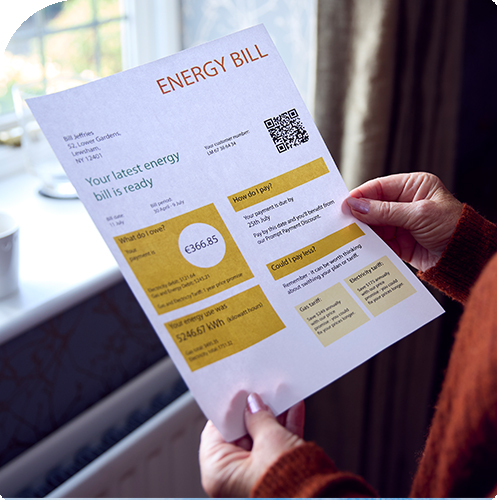
- Your bills. Your annual kWh is on your energy bill or supplier app. We size from real usage, not house size.
- Your solar output. A 4kWp system rarely has more than 10kWh spare on a good day, so a much bigger battery will sit part-empty in summer unless you also charge it on a cheap overnight tariff.
- Power, not just capacity. Capacity (kWh) is how much the battery stores; power (kW) is how much it can supply at once. If you want to run an oven, kettle and shower together, or back up the house in a power cut, the power rating matters too.
Modular systems from Fox ESS, Sigenergy, myenergi, Sunsynk, Pylontech and Dyness let you start smaller and add modules later.
Which home battery brand should I choose?
The best battery is the one that fits your existing system and the way you use energy. Every brand we install uses lithium iron phosphate (LFP) cells, the safest mainstream chemistry for homes. They fall into two groups: complete systems, where one brand makes the inverter and battery, and pairings, where a Solis inverter runs a Pylontech or Dyness battery.
| Brand | Type | Best for | App | Retrofit to existing solar |
|---|---|---|---|---|
| Fox ESS | Complete system | Best all-round value; large UK support network | FoxCloud | Yes: AC-coupled or hybrid |
| SolaX | Complete system | Reliable hybrid systems, single and three phase | SolaXCloud | Yes: AC-coupled or hybrid |
| Sigenergy (SigenStor) | All-in-one stack | Larger homes, EV owners, smart optimisation; modular to 48kWh+ | mySigen | Yes |
| myenergi (libbi) | Complete system | Homes with a zappi charger or eddi diverter; 5kWh modules, up to 4 per inverter | myenergi app | Yes: installs alongside an existing system |
| Sunsynk | Complete system or inverter only | Flexible set-ups and strong backup; Elite stacks 5.12–30.72kWh | Sunsynk Connect | Yes: hybrid |
| Solis + Pylontech | Inverter + battery pairing | Cost-effective, proven pairing; easy to expand | SolisCloud | Yes: hybrid |
| Solis + Dyness | Inverter + battery pairing | Cost-effective alternative to Pylontech | SolisCloud | Yes: hybrid |
Complete systems
Fox ESS is one of the most widely installed battery brands in the UK. It offers both AC-coupled and hybrid inverters and stackable battery modules, so it suits most retrofits.
SolaX makes hybrid inverters and matching batteries for single- and three-phase homes. It is a dependable choice where you want one brand and one warranty.
Sigenergy SigenStor combines inverter, battery modules and optional EV charging in one stack. It suits larger homes and EV drivers who want room to grow.
myenergi libbi is designed by the UK company behind the zappi EV charger and eddi hot water diverter. If you already have either, libbi lets you control solar, battery, car and hot water from one app.
Sunsynk makes hybrid inverters and its own batteries, including the all-in-one Elite range. Its inverters also work with third-party batteries such as Pylontech, which makes them a flexible choice for retrofits and backup.
Inverter and battery pairings
Solis makes inverters, not batteries. Paired with a Pylontech or Dyness battery, it gives a proven, cost-effective system that is easy to expand by adding modules. This is often the best value when your old inverter needs replacing anyway.
Not sure which suits you? We recommend a brand after a survey, based on your inverter, roof, usage and budget, and we'll tell you if a battery isn't worth it for your home.
What about Tesla Powerwall 3 or GivEnergy?
Powerwall 3 is a capable battery but one of the most expensive per kWh in the UK, and GivEnergy is no longer trading. That is why we install the brands above instead.
Tesla Powerwall 3 stores 13.5kWh, has a built-in solar inverter and delivers up to about 11kW, with a 10-year warranty. Installed prices typically run from about £8,000 to £10,500. For homes that want similar capacity for less, a Sigenergy SigenStor or a modular Fox ESS system can match or exceed 13.5kWh at a lower cost per kWh.
GivEnergy entered administration on 9 April 2026, and the administrator has confirmed the company has ceased trading. Existing GivEnergy batteries should keep working, and the app is run by a separate company that is not in administration. But warranty support for new purchases is uncertain, so we no longer recommend GivEnergy for new installations.
Already have a GivEnergy system? We support all GivEnergy owners, whoever installed it. See GivEnergy Administration: What Homeowners Need to Know.
How much will a home battery save me?
A typical 3-bed home saves around £400 a year with a 10kWh battery on a time-of-use tariff, even without solar. Adding solar usually raises that, because the battery fills from your panels for free for much of the year.
A battery saves money in two ways:
- Storing your own solar. Without a battery, daytime surplus is exported for a few pence. With one, you use it in the evening instead of buying grid power at around 30p a unit or more.
- Charging cheaply overnight. On a tariff such as Octopus Go (around 9.5p overnight), the battery fills up in the cheap window and runs your home through the expensive hours. In winter, when solar output is low, this does most of the work.
Our worked examples for battery-only homes show savings of about £395 a year for a typical home (payback about 11 years) and about £570 for a larger or all-electric home (payback about 8 years). See Can You Install a Home Battery Without Solar Panels? for the full figures.
To get the most from your battery:
- Choose the right tariff: The Ultimate Guide to UK Time-of-Use Tariffs and Battery Automation
- Consider a smart battery tariff, but keep a backup reserve: Smart Battery Tariffs UK
- Let software plan charging for you: AI-Powered Battery Optimisation
How does a battery installation work with Fit Solar?
Most battery retrofits are installed in a single day once the survey and any network approval are done.
- Survey and quote. We check your existing inverter, consumer unit, usage and where the battery can go, then recommend a brand and size.
- Network approval. If your system needs G99 approval, we apply to your network operator before installation.
- Installation. Our MCS-certified team fits the battery, any new inverter and backup switchgear.
- Set-up. We commission the system, connect it to the app and set charging for your tariff.
- Paperwork. You get your MCS certificate, warranty documents and any Feed-in Tariff notification.
- Aftercare. Ongoing support and servicing through Fit Care.
Ready to add a battery? Book an appointment for a free survey, or see our home battery storage packages and prices.
Related guides
Yes. A battery can be AC-coupled alongside your existing inverter, or your inverter can be replaced with a hybrid inverter that runs both panels and battery.
Fit Solar installs a 5.2kWh battery from £2,995 and a 10kWh battery from £4,495, at 0% VAT until 31 March 2027.
Most homes need 5–10kWh. Homes with a heat pump, EV or high evening use may need 10–15kWh or more.
No, as long as it is installed and metered correctly and your FIT supplier is told. We handle the notification.
Powerwall 3 is a strong product, but at about £8,000–£10,500 installed it costs more per kWh than systems such as Sigenergy or Fox ESS of similar capacity.
We no longer recommend GivEnergy for new installations because the company entered administration in April 2026. We continue to support existing GivEnergy owners.
It depends on your existing inverter, budget and goals. We install Fox ESS, SolaX, Sigenergy, myenergi libbi, Sunsynk, and Solis with Pylontech or Dyness batteries, and recommend one after a survey.
Modern LFP batteries are designed for thousands of charge cycles, and our batteries carry a 12-year warranty.
Only if it has backup (EPS) capability set up. Some systems back up a few circuits; others back up the whole house.
Yes. VAT on battery installations rises from 0% to 5% on 1 April 2027 unless the government extends the relief.